
Symptom guide · Ovens
Viking oven locked after self-clean?
Door will not open, the oven went dead, or an F-code appeared after a cleaning cycle — we release the door without damage and repair the latch, the self-clean fuse or the control with genuine OEM Viking parts. $89 waived with repair, 365-day labor warranty.
- $89 service call, waived with repair
- 365-day warranty on all labor
- Genuine OEM Viking parts
- Same-day estate appointments
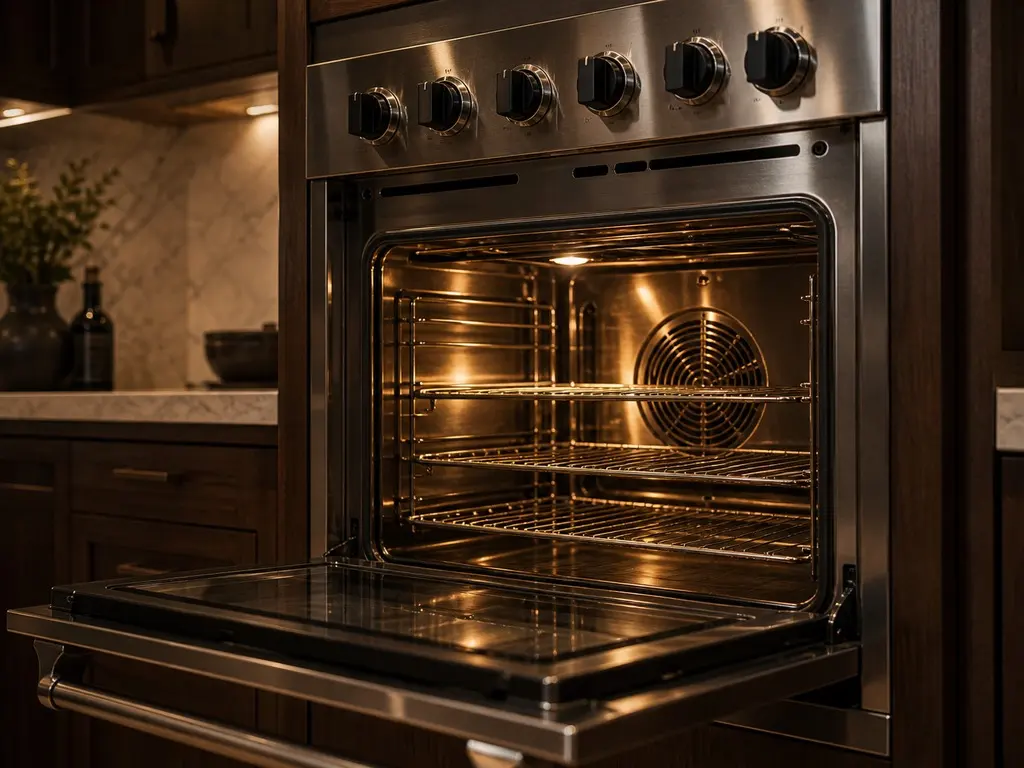
Answer first
The door is held shut on purpose — until something fails
A Viking oven that stays locked after self-clean is almost always the motorized door latch, a self-clean thermal fuse that opened when the cavity ran too hot, or a control that lost track of the cycle — not a ruined oven. The pyrolytic clean pushes the cavity past 800°F, and the latch deliberately keeps the door shut until an internal probe says it is safe to open. When the latch motor, its switch, or the cooling fan that protects the circuit gives out, the door can stay locked even after the oven is stone cold. We diagnose the latch and the self-clean circuit on site, ease the door open without bending it, and repair with genuine OEM Viking parts. The $89 service call is waived with the repair.
Match the symptom
What the lock is telling you
| What you see | Likely cause | What we do |
|---|---|---|
| Door still locked once fully cool | Jammed latch motor or failed door-lock switch | Test the latch circuit and replace the motor or switch with an OEM part |
| Oven dead and locked after the cycle | Blown self-clean thermal fuse or hi-limit | Replace the one-shot cutoff and confirm the cooling fan that opened it |
| F-code or over-temp fault after cleaning | Drifted cavity sensor or control reading high | Verify the probe, then recalibrate or replace the control |
| Latch moves but the door will not release | Worn latch cam or a door bent by forcing | Rebuild the latch assembly and realign the door and seal |
| Smoke or strong burning smell mid-clean | Heavy soil load or a stalled cooling fan | Clear residue, test the fan and high-limit before re-running |
Latch and self-clean-circuit faults are always confirmed with metered testing before any part is replaced.
Why it happens here
The 6 a.m. locked-door call, decoded
In the big kitchens off Holbrook-Palmer Park and through West Atherton, Lindenwood and Lloyden Park, the self-clean call follows a pattern we know cold: the cycle goes on the night before a dinner, and by six the next morning the door will not open. Estate ranges and wall-oven stacks here often carry two or three cavities, and the one that does the daily roasting is the cavity whose latch has cycled thousands of times — so it is usually the main or lower oven that jams first, at the worst possible moment.
There is a second, less obvious failure we look for whenever an oven is both locked and completely dead after a clean. Viking guards the self-clean circuit with a one-shot thermal cutoff. If the cavity cooling fan slows, or a tired door gasket lets too much heat bleed into the control bay, that cutoff opens to protect the electronics — and it takes the latch power down with it. Swapping the fuse without finding the reason just sets up a repeat in a month, so we trace the fan, the seal and the high-limit before signing off. On the warm, still afternoons the inland Peninsula gets well after the coast has fogged over, that cooldown runs slower and the circuit works harder, which is why we see these calls cluster in late summer and around the holidays.
Inside the repair
Telling a jammed latch from a control fault
Separating a mechanical latch jam from an electrical fault is straightforward with the right test. We power the latch motor directly and watch whether the lock cam actually travels; a motor that hums but will not move is a worn cam or a binding linkage, while a motor that stays silent sends us to the switch, the harness, or the self-clean fuse. At the control we read the door-switch state and the thermal-cutoff continuity, so we know before we open anything whether the board still thinks the door is locked.
Only once the door is safely released do we realign it and check the seal, because a door that has been forced sits proud and leaks heat into the very circuit that failed. Every part we fit is a genuine OEM Viking component, installed to the manufacturer's procedure and backed by our 365-day labor warranty.
- Latch motor driven directly to watch the lock cam travel
- Door-switch and thermal-fuse continuity read at the control
- Cavity probe and high-limit verified against spec
- Door eased open and realigned — never pried

Before you call
Safe steps while you wait
- 1
Give the cavity a full hour to cool
A Viking pyrolytic clean drives the oven past 800°F, and the latch is designed to stay engaged until the cavity drops below a safe threshold. Most "stuck" doors simply have not finished cooling, so set a timer for an hour before you decide anything is broken.
- 2
Cut power for two minutes, then restore it
Once the oven is cold, switch it off at the breaker for two minutes and back on. That clears a hung lock relay or a control that froze mid-cycle, and on a single-oven Viking it often releases the latch on the next power-up.
- 3
Read and write down any code
Note any F-code or "LOC"/"door" message on the display before you reset, because it points the diagnosis at the latch switch, the sensor, or the control board rather than guesswork.
- 4
Listen for the latch motor
With power restored, start (then cancel) a clean cycle and listen at the door. A faint hum with no movement means the latch motor is energized but jammed; total silence points to the switch, wiring, or a blown self-clean fuse.
- 5
Book a latch and self-clean-circuit diagnosis
If the door is cool and still locked, stop here. We release it without bending the door, then test the latch, the high-limit and the cooling fan so the repair holds — many estate calls finish in one visit with the part on the van.
If you smell a strong burning odor or see smoke during a cycle, cancel the clean, cut power at the breaker, and ventilate the kitchen before doing anything else.
What not to do while you wait
- Do not pry, lever or force the door — a bent door pulls the seal out of true and leaks heat into the control.
- Do not start a second self-clean to "reset" the lock; it stresses the parts that just failed.
- Do not pull a wall-oven out of its cabinet stack yourself — these units are heavy and panel-tight.
- Do not keep using an oven that threw an over-temp code; a heat circuit that will not shut off needs service.
Planning the repair
Self-clean latch repair cost in Atherton
| Service | Draft range | Typical time | Notes |
|---|---|---|---|
| Diagnostic / service call | $89 | 45–90 min | Model, ignition, temps and airflow checks — $89 waived with repair. |
| Oven igniter / bake element | $300–$700 | 1–3 h | Depends on part availability and model. |
| Burner / spark module / gas valve | $250–$650 | 1–3 h | Sealed-burner cooktop & range work. |
| Oven control / temp sensor | $350–$1,250 | 1–4 h | Quoted after electrical verification. |
| Built-in fridge sealed system / compressor | $1,450–$3,600 | 2–6 h + parts | Requires pressure & electrical evidence. |
Draft ranges for planning; final quote depends on model, parts, access and diagnosis.
Homeowner feedback
Atherton oven repairs
5 / 5
1,335 verified reviews
They also handle our Wolf dual-fuel range. A convection fault and a noisy igniter both fixed in a single visit with factory parts. The same careful, estate-savvy crew that services our Viking equipment — consistent and trustworthy.
I gave them our model and serial over the phone and they arrived with the right parts on the truck. The range igniters and an oven sensor were replaced in one visit. Efficient, transparent on cost, and genuinely expert with Viking.
Our built-in refrigerator quit overnight. They prioritized the call, found a compressor relay issue, and had it cooling again the same day with a factory part. The full-year labor warranty turned a stressful morning into a non-event.
Good to know
Frequently asked questions
Why is my Viking oven still locked after the self-clean cycle finished?
A Viking self-clean drives the cavity past 800°F and the motorized latch holds the door shut until everything cools below a safe point, so the most common answer is simply that it has not finished cooling — give it a full hour. If the oven is cold and the door is still locked, the latch motor, the door-lock switch, or the control has failed, and forcing the door only bends it. We test the latch circuit on site and release the door without damage.
How long should I wait before the door unlocks on its own?
Plan on about an hour from the end of the cycle. The latch will not release while an internal probe still reads the cavity above its safety threshold, and a hot summer kitchen in Atherton can slow that cooldown. If an hour passes, the cavity is cool to the touch, and the door is still locked, that is the line where it stops being normal and becomes a latch or control fault worth booking.
My Viking oven went completely dead and locked after self-clean — are the two related?
Usually yes. Viking protects the self-clean circuit with a one-shot thermal cutoff. If the cavity cooling fan slows or too much heat escapes into the control bay during the cycle, that fuse opens to save the electronics — and it can take the door-latch power with it, leaving the oven both dead and locked. Replacing only the fuse without finding why it blew invites a repeat, so we confirm the fan, the seal and the high-limit before we close the panel.
Is it safe to run the self-clean again to clear a stuck lock?
No. Running a second high-heat cycle to "reset" a latch that is already failing stresses the same parts that just failed and can blow the thermal fuse or warp the door. Cut power for two minutes instead, and if the door is cool and still locked, book a diagnosis rather than re-heating it.
Can you unlock and repair it before a dinner or the holidays?
Yes, and that is the timing we see most. The self-clean goes on the night before an event and the door will not open the next morning, so refrigeration and oven-lock calls are prioritized for same-day and next-day visits across Atherton 94027, Menlo Park, Redwood City, Woodside, Palo Alto and Portola Valley. Share your gate code or estate-manager contact when you book and the technician arrives ready, with the common latch and control parts already on the van.
What does a Viking self-clean latch repair cost?
A door-latch motor or lock-switch replacement is a targeted repair, while a blown thermal fuse with a cooling-fan correction or a control-board fault sits higher; most self-clean-related work lands between roughly $300 and $1,250 with the part. The $89 service call is waived when you approve the repair, we quote in writing after metered testing, and every job carries our 365-day warranty on all labor.
Should I even use the self-clean cycle on a Viking professional oven?
Use it sparingly. The pyrolytic cycle is hard on the latch, the door seal and the cooling fan, and on the hard-worked main oven of an estate range those parts wear fastest. We suggest wiping spills while the cavity is still slightly warm, cleaning by hand before big events, and saving the full self-clean for quiet weeks — never the night before you need the oven. That habit alone prevents most of the locked-door calls we run in West Atherton.
White-glove Viking service
Locked Viking oven? We will open it and fix the cause
Speak with a Viking specialist now, or schedule online in under a minute. $89 service call, waived with repair, and a 365-day warranty on all labor.